
How can nutrition affect PCOS symptoms? A review of “Meals She Eats”
If there’s one thing I’ve learned in my PCOS journey, it’s that lifestyle choices like nutrition, exercise, and stress can greatly affect my PCOS symptoms. These symptoms—such as bloating, acne, mood swings, brain fog, fatigue—can occur throughout my entire cycle (because of unbalanced hormones like high cortisol or androgens), but they typically show up in my luteal phase and can be symptoms of low progesterone. In Meals She Eats by Tom and Rachael Sullivan, they dive into how nutrition plays a role.
What I love about this cookbook is that it’s 1/2 cookbook, 1/2 education, with dashes of anecdotal essays.
The beginning of the book outlines the menstrual cycle and hormones and what PCOS is. Rachael herself has PCOS, and her husband Tom kept an Instagram diary of the meals he would cook for her to help support her health. Then, Tom and Rachael explore recipes for each phase of the menstrual cycle.
What I love about this book:
The education! The background about the menstrual cycle, and how to support each phase, reminded me of what I learned in the course Power of Periodization by Balanced Beyars. The information was approachable and easy to understand.
The grocery lists for each phase of the menstrual cycle.
Rachael’s Pasta (p. 126). You can never go wrong with sun-dried tomatoes.
Grocery shopping each week will be so much more fun! It’s exciting to pick a meal or two that will help support my health based on my menstrual cycle.
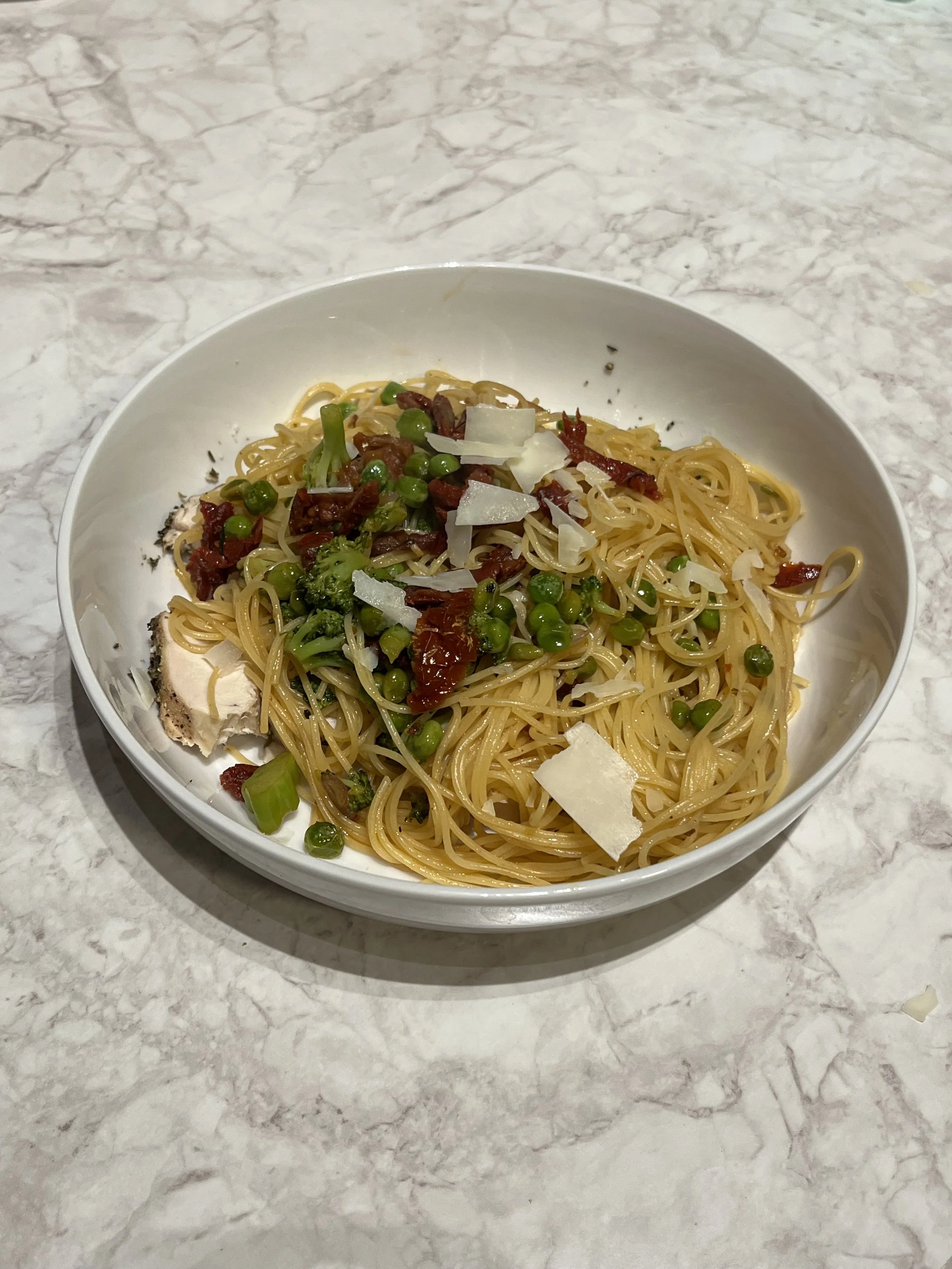
Rachael’s Pasta
Areas for improvement:
A Note on Cervical Mucus: On p. 42, when the menstrual cycle and its symptoms are explained, the authors claim sticky mucus is “not fertile.” As I learned in the SymptoPro program, it’s often safer to consider all mucus types as potentially fertile. This is a small but important distinction for those observing cervical mucus for family planning—every body is different, and "sticky" doesn't always mean "infertile." This is something women can discuss with a certified NFP instructor after a few charted cycles.
The Stress of Restrictive Eating: The book leans heavily into being gluten-free. While gluten can be inflammatory for many with PCOS, I’ve found that obsessing over "forbidden" foods (like seed oils, for me) can cause more stress than the food itself! Sometimes, it’s best to simply focus on whole foods rather than strict elimination.
A Different Perspective: If you find the "science" of nutrition overwhelming, I highly recommend pairing this with Around the Catholic Table by Emily Stimpson Chapman. It’s a beautiful reminder that food is a gift and a way to nourish the soul, not just a set of biological boxes to check. Similar to Meals She Eats, Around the Catholic Table includes both recipes and essays (and I received both books for Christmas!).
TL;DR:
Meals She Eats is a fantastic resource for women diagnosed with PCOS.
Not only are recipes provided, but there is a large section dedicated to teaching the reader about the menstrual cycle, PCOS, and nutrition.
It’s important to consider your own symptoms, health goals, lifestyle, and your doctor’s advice when making decisions about your nutrition.